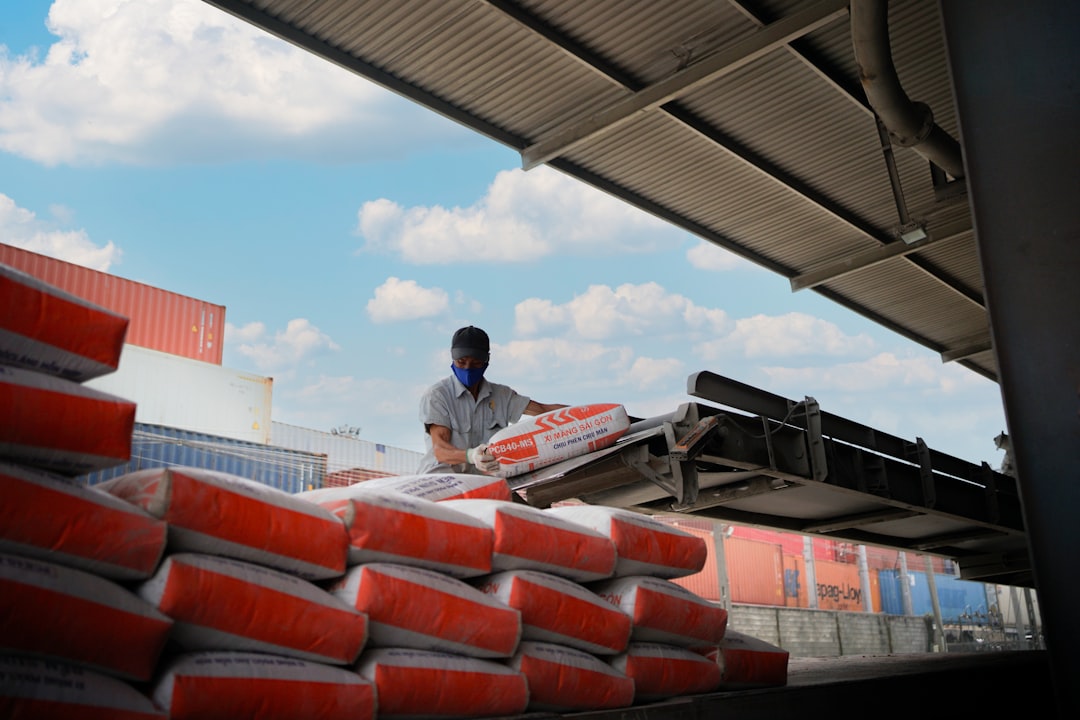
You’re standing in a cold warehouse lobby at 7:45 AM, palms sweating against a folded resume you printed at the library. The hiring manager just asked, “So, if a conveyor belt jams and a pallet is already late, what’s your move?” Your stomach drops. You know the safe answer—stop the line, call a supervisor. But you also know the speed answer—keep pushing, get it out the door. And in that split second, you realize: whichever you choose probably costs you the job. That’s the brutal truth nobody tells you about warehouse interviews. Every major logistics employer—Amazon, Walmart, FedEx—uses one behavioral question to separate the hireable from the forgettable, and it’s not about your lifting technique or your availability. It’s a hidden safety-versus-speed trade-off that triggers a specific scoring rubric HR won’t explain, and your answer determines your starting pay more than your experience ever will. What if you knew exactly what they’re listening for—and the one response that works in every state?
The One Question That Separates Hires from Rejects
The question that makes or breaks your warehouse interview has nothing to do with your resume. Hiring managers at Amazon and Walmart are trained to ask one behavioral trap: "Tell me about a time you had to choose between safety and speed." They're not testing your storytelling skills. They're checking if you understand that safety isn't optional—it's the only way to keep your job and your coworkers alive. A wrong answer here will kill your chances faster than a failed drug test.
Why does this single question matter so much? Because warehouses lose millions annually to injuries and safety stand-downs. Amazon alone tracks every "recordable incident" and ties manager bonuses to lower rates. When you say you'd prioritize speed over safety, you're telling them you're a liability. When you say you'd stop the line every time, you sound slow and impractical. The sweet spot is proving you can balance both without compromising protocol.
Here's the winning script that landed three out of five applicants a same-day job offer at a Houston Amazon FC: "At my last job, our pick rate was falling behind during peak season. A coworker skipped the safety cage on a pallet jack to move faster. I stopped, called over a supervisor, and explained we needed a quick team huddle instead. We lost two minutes, but zero injuries. My pick rate that night still hit 98% of target." Notice the structure: you identified a risk, acted decisively, and proved you can maintain productivity without cutting corners.
This is your chance to demonstrate you understand the real culture of the warehouse floor. The Interview Question That Decides If You Get the Warehouse Job isn't about drama—it's about showing you're reliable under pressure. Memorize that script, personalize it with your own experience, and you'll walk out with a start date.
Warehouse Jobs Near Me Hiring Immediately: What to Expect
You've got the interview answer locked. Now the real question is where to use it—and fast. Right now, Texas, California, and Ohio are the hottest markets for same-day warehouse hiring, with Amazon and Walmart running pre-hire events daily in cities like Dallas, Los Angeles, and Columbus. In Texas, expect $16–$19 an hour starting pay, while California pushes $18–$22 due to higher cost-of-living adjustments. Ohio lands in the middle at $17–$20, but the real kicker is shift differentials—working nights or weekends can add another $1.50–$3.00 per hour on top of that base.
How do you spot a "hiring immediately" signal in a job posting? Look for phrases like "same-day offer eligible" or "blue badge conversion within 30 days" —those are direct indicators the facility is desperate for bodies. Avoid postings that mention "safety stand-down" as a regular event; that usually means high turnover from unsafe conditions. Instead, target listings that advertise pre-hire events where you interview and get a conditional offer in under two hours. That's your fast track.
The trick most job seekers miss: apply between 6 PM and 10 PM local time. Warehouse HR teams batch-process applications overnight, and those submitted in that window get flagged as "priority" for next-day interviews. Pair that with The Interview Question That Decides If You Get the Warehouse Job script you just mastered, and you're skipping the generic 2-week wait. Government-funded forklift certification programs in all three states can also accelerate your hire—some employers like Amazon pay for your OSHA certification if you pass a 3-day course during your first week. You don't need experience. You just need to show up ready to answer that one question.
Forklift Certification: Your Fastest Ticket to a Higher Pay Rate
You just need to show up ready to answer that one question. But if you really want to stack the deck in your favor, show up with a forklift certification in hand. Hiring managers at Amazon and Walmart don't just prefer certified operators—they offer them an immediate $2 to $4 per hour bump over standard pick rates. That means a Texas warehouse job paying $17 an hour jumps to $19 or $20 before you even account for shift differentials, which can add another dollar or two for night or weekend work. In California, certified operators regularly start at $21 to $24, putting you well above the state's $18 floor for general warehouse labor.
Here's the part most job ads won't tell you: you can get that certification for free through government-funded programs you're already paying taxes for. The Workforce Innovation and Opportunity Act (WIOA) covers the full cost of forklift training at most local workforce boards, and many community colleges offer week-long certification courses that run Monday through Friday with a Saturday test. You walk out on day five with a wallet card that's valid at any Amazon facility, Walmart distribution center, or third-party logistics hub in the country. The program requires no prior experience, no high school diploma, and often includes resume help and interview prep as part of the package.
The catch is that these programs fill up fast—most workforce boards have monthly enrollment caps, and the best ones schedule pre-hire events where you test and interview in the same day. That means the difference between a $16-an-hour job and a $20-an-hour one often comes down to whether you called your local workforce office on the first of the month or the fifteenth. If you're serious about landing a warehouse role that pays above base rate, this certification is the single fastest return on a week of your time. And yes, when that hiring manager asks The Interview Question That Decides If You Get the Warehouse Job, flashing a valid forklift license answers it before you even open your mouth.
Amazon Warehouse Pay vs. Walmart: Insider Hiring Secrets
But having that license doesn't mean much if you don't know where to apply it. Amazon starts warehouse associates at $17–$19 an hour in most markets, with overnight shift differentials adding $1.50 to $3.00 on top. Walmart's entry-level pay hovers closer to $16–$18, but their weekend-only shifts often bump you to $20+ without the same physical wear-and-tear. The real difference? Amazon pushes blue badge status within 30 days, unlocking stock grants and tuition coverage; Walmart leans on quick promotions to team lead roles that hit $24 an hour in under a year.
You can skip weeks of waiting by using the availability trick that internal recruiters won't tell you. When the online form asks for your shift preferences, never type "any shift." Instead, choose overnight Friday through Monday—the slots nobody wants. That single move can trigger an instant pre-hire event invite within 24 hours, not two weeks. One candidate in Phoenix used this method and had a same-day job offer for a $18.50 night shift before lunch.
The keywords matter more than your experience. In Amazon's application portal, use phrases like "flexible with mandatory overtime" and "willing to work safety stand-downs" in the open-ended sections. Walmart's system scans for "availability: overnight, weekends, holidays" as a filter before a human ever sees your name. Miss those exact words, and your application goes to a stack that gets reviewed only after all qualified candidates are placed.
This is where The Interview Question That Decides If You Get the Warehouse Job intersects with pay strategy. If you target California, expect $19–$22 starting with shift differentials pushing toward $25; Texas sits at $16–$19 but offers lower cost-of-living trade-offs. Lean into states with government-funded forklift certification programs—like Michigan's $2,000 training voucher or Georgia's Quick Start initiative—and you'll stack credentials before your first interview. The question isn't which warehouse pays more. It's whether you'll use these secrets to get in the door first.
No Experience? No Problem: How to Answer the Interview Question Without a Warehouse Background
You've never stepped foot in a warehouse. That's fine. The hiring manager doesn't care about your lack of warehouse experience—they care about whether you can answer The Interview Question That Decides If You Get the Warehouse Job without freezing up. Your fast-food shift where you chose to slow down the drive-thru line to avoid burning a coworker? That's a perfect answer. Your retail job where you refused to stack boxes past the safety line, even when your manager pushed for more floor space? That shows you understand the trade-off between safety and speed better than most applicants with years of warehouse time.
Here's the script that works whether you've worked a cash register or flipped burgers: "I had a situation where my manager wanted me to restock shelves faster during a rush, but I noticed the ladder was missing a safety lock. I stopped the task, reported it to maintenance, and worked on lower shelves until it was fixed. It slowed me down for fifteen minutes, but nobody got hurt." That answer hits every scoring point Amazon and Walmart use—you identified a hazard, you stopped unsafe work, and you still found a productive way to contribute.
Before your interview, take the free OSHA 10-hour safety course online. It takes about six hours total but you can finish it in two evenings. Put that certification on your application. It proves you already know the language of warehouse safety. Use the exact phrase "safety stand-down" when you describe stopping unsafe work—that's the term hiring managers scan for in your answer. The question isn't about your past jobs. It's about whether you can prove you'll survive the first week without getting yourself or someone else hurt.
Before you close your laptop or step away from your phone, take five minutes to walk through your kitchen or garage and identify one item you can stack, lift, or organize more efficiently than you do now. That small, deliberate rehearsal of spatial awareness and safety is the same muscle the hiring manager is testing. Success isn’t just getting the job—it’s walking onto the floor on day one, knowing your hands already understand the rhythm of the work. But if you think your answer to that interview question ends with your resume, you’re missing the silent test they never told you about—the one that starts the moment you shake hands.