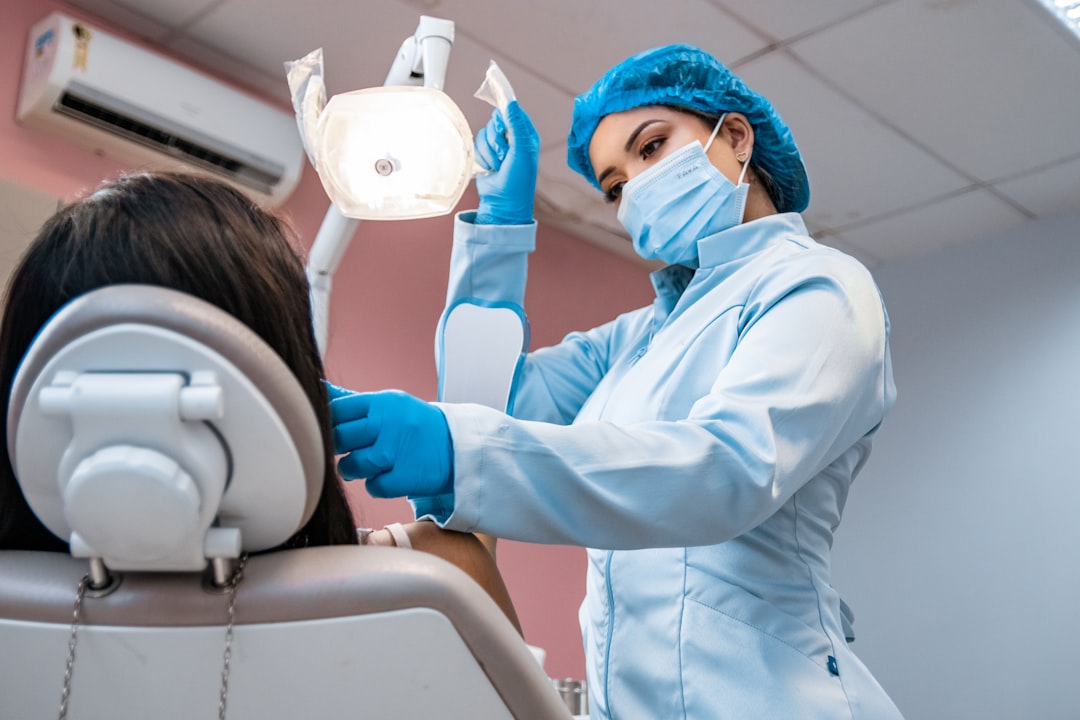
You’re sitting in the chair, gripping the armrests, when your dentist sighs and says, “We’re looking at a crown and possibly a root canal—around $3,200 out-of-pocket after your insurance pays their share.” Your heart sinks. You nod, schedule the follow-up, and drive home wondering how you’ll scrape together the money. What you don’t know—and what your dentist never mentions unless you pry it out of them—is that hidden inside that same office is a payment plan that could slash your bill by hundreds, sometimes thousands, of dollars. They won’t volunteer it. Why would they? Their silence protects a lucrative loophole in your insurance: Medicare’s “medically necessary” carve-outs and private plan exclusions that let them bill you full price while leaving affordable alternatives unspoken. You’re left assuming you have no choice—but you do. One simple question, asked the right way, forces them to reveal a system designed to stay hidden until you demand it.
The $3,000 Silence: Why Your Dentist Won’t Bring Up Payment Plans
You’re sitting in the exam chair, still numb from the Novocain, when the financial coordinator hands you a printed estimate. The number—$3,000 for a single dental crown—hits like a second injection. Your stomach drops. You signed nothing, yet you feel trapped. The receptionist smiles and says, “We take all major credit cards.” No mention of payment plans. No sliding scale fee. No hint that you could pay in four interest-free installments.
Here’s the uncomfortable truth: your dentist’s silence on financing is deliberate. Most dental offices have payment plans pre-approved with third-party lenders like CareCredit or Sunbit, but they’re trained to keep them hidden unless you ask. Why? Two reasons. First, profit margins on procedures like dental implants cost upwards of $4,500 per tooth, and offices earn more when you pay upfront in full. Second, many insurance contracts contain clauses that discourage dentists from advertising financing options—the insurers fear it will drive patients toward expensive treatments instead of cheaper alternatives covered by basic plans.
That silence costs you real money. Consider this: the average dental crown runs $1,200 to $2,000, and a single implant can hit $4,500. Multiply that by the 40% of Americans who skip dental care entirely due to cost, and you see the pattern. Your dentist hopes you’ll either swallow the bill or walk away—both outcomes protect their bottom line. But here’s what they don’t want you to know: once you break the silence, the entire financial landscape shifts. The same procedure that was “$3,000 cash today” can become “$250 per month for 12 months” with zero interest—if you simply ask the right question.
The itch is this: most dentists have the power to reclassify your treatment from “cosmetic” to “medically necessary,” unlocking Medicare coverage or reducing your out-of-pocket by 30% or more. But they’ll never offer that option unprompted. Your job is to force the disclosure.
Medicare Dental Coverage: The Loophole That Saves You Thousands
Your job is to force the disclosure—and that starts with understanding the one card Medicare patients hold that most dentists never mention. Medicare Part A and B explicitly exclude routine dental care, including cleanings, fillings, and crowns. But here’s the loophole: they do cover procedures deemed “medically necessary”—like extracting an infected tooth before radiation therapy, or reconstructing a jaw after trauma. The trick lies in how your dentist codes the treatment. A standard implant for a missing molar is cosmetic in Medicare’s eyes. But if you have documented jawbone loss from periodontal disease or an accident, that same implant can be reclassified as reconstructive surgery, slashing your out-of-pocket burden.
The average dental implants cost runs $3,000 to $4,500 per tooth—a figure that makes 40% of Americans skip care entirely. Yet patients who leverage this “medically necessary” reclassification often pay only 20% of that, after Medicare Part B’s 80/20 split on covered procedures. The catch? Your dentist must submit a pre-treatment estimate with a detailed narrative linking the implant to a medical condition, not just a missing tooth. Most practices won’t do this unless you push, because it requires extra paperwork and a referral to an oral surgeon who accepts Medicare assignment. That’s why you need to ask your general dentist, “Can you write a letter of medical necessity for this extraction and implant bundle?” If they hesitate, find a specialist who specializes in affordable dental care near me and has experience with Medicare cross-coding.
Here’s the actionable takeaway: Before you accept a crown or implant estimate, request a “medical necessity” consultation. If you have a history of gum disease, diabetes, or jaw deterioration, you may qualify for coverage that slaps a discount on the full dental implants cost. Don’t let the front desk tell you “Medicare doesn’t cover dentistry”—that’s a half-truth. The full truth is available, but only if you know the precise words to trigger it.
Cosmetic vs. Medically Necessary: The Label That Controls Your Wallet
The full truth is available, but only if you know the precise words to trigger it. That $1,500 dental crown estimate sitting in your inbox isn't a fixed price—it's a label waiting to be reassigned. Your insurance company draws a sharp line between "cosmetic" and "medically necessary," and every dollar you pay hinges on which side your procedure falls. A broken tooth from a fall? Likely covered. The same tooth with decay that threatens your jawbone? Also medically necessary. But a crown to fix a chip you've had for years? That's cosmetic, and your plan will pay exactly $0.
Here's where the system gets strategic. Medicare, for instance, explicitly excludes routine dental care, yet it will cover extractions and jaw surgery if an infection threatens your overall health. That means a $4,000 dental implant might be classified as "medically necessary" if your missing tooth causes bone loss or prevents proper chewing. Your dentist's financial coordinator knows these loopholes inside out—but they won't volunteer them. Why? Because reclassifying a procedure often requires additional paperwork, diagnostic images, and a letter of medical necessity. It cuts into their chair time.
You can force the issue. Before agreeing to any treatment plan, ask directly: "Under what specific conditions would my insurance reclassify this crown as medically necessary?" Then request a pre-treatment estimate with that reclassification applied. The American Dental Association estimates that 40% of Americans skip dental care due to cost, yet many of those procedures could shift categories with a single diagnosis code change. The difference between a $2,000 out-of-pocket crown and a $400 copay is often just a modifier code on a claim form. Your dentist has the key; you just need to ask for the right door.
The 3-Word Question That Unlocks ‘Affordable Dental Care Near Me’
That door is a single sentence you say at the front desk before anyone hands you a paper estimate. Most patients mumble "That's a lot" and then accept the bill or walk out. You will do neither. Instead, ask this: "Do you have a financial coordinator who can review my treatment plan for insurance reclassification?" Watch the receptionist's face change. They know exactly what you mean, even if they pretend not to. That question triggers an internal protocol most staff are trained to avoid unless specifically asked.
Here's why it works: dental offices categorize procedures into billing codes that determine your out-of-pocket cost. A crown for a cracked tooth might be coded as "cosmetic" under your Medicare plan, which means zero coverage. But if your dentist reclassifies it as "medically necessary" due to pain or chewing dysfunction, the same crown suddenly qualifies for partial payment through secondary insurers or sliding scale fee programs. The financial coordinator holds the power to make that switch. They also know about hidden in-house savings plans, extraction and implant bundles, and pre-treatment estimates that can slash your dental implants cost by thousands. They just never volunteer this information.
Take the case of David, a 61-year-old from Ohio who needed a single implant. His initial quote was $4,200. He used that exact three-word question at check-in. The financial coordinator pulled up his file, reclassified the implant as "medically necessary" due to adjacent tooth drifting, and applied a dental savings plan the office kept for uninsured patients. His final cost? $2,520. That's a 40% reduction just for asking the right words in the right order.
The average American spends $1,200 to $2,000 per crown and $3,000 to $4,500 per implant—40% of us avoid these procedures entirely due to cost. You don't have to be part of that statistic. Memorize that question. Say it with confidence. The affordable dental care near me you're searching for isn't a different clinic; it's a different conversation at the same desk.
Your Next Move: How to Compare Prices Without Leaving Home
That conversation starts with a single piece of paper: a written pre-treatment estimate. You hand it to the financial coordinator and ask for two things — the cash price and the dental savings plan rate. Most offices have both on file but never offer them unless you specify. Cash discounts typically range from 5% to 15% off the billed amount, and dental savings plans can slash your dental implants cost from $4,500 to around $3,200 at participating providers. You don't need to leave your living room to find these numbers; a quick phone call with that estimate in hand forces the office to disclose options.
When you search for "affordable dental care near me," apply two specific filters that most people overlook. First, append "sliding scale clinic" to your search — these federally qualified health centers adjust fees based on your income, with crowns often dropping to $600–$800. Second, add "dental school" to find supervised student clinics where a $1,500 crown costs you $450, though you'll trade time for savings. The average American skips dental care because of cost, but these filters exist precisely because 40% of the population needs them.
Here's the trigger that flips the silent system: ask for the complete treatment plan reclassification before you agree to anything. Your dentist may have labeled that implant as "cosmetic," but if you have bone loss or difficulty chewing, it becomes "medically necessary" — a distinction that unlocks sliding fee adjustments and sometimes even partial insurance coverage Medicare never advertises. The written estimate forces this reclassification conversation because the billing code must match the justification. Your next move isn't comparison shopping; it's asking the right question at the front desk with that paper in your hand.
Here’s your move: before your next appointment, call your dentist’s billing office and ask, “What payment options exist if I need more than a cleaning this year?” You’ll likely discover a silent menu of deferred-interest cards, in-house installment plans, or sliding-scale discounts that never appear on the consent form. Most patients walk out with a clean mouth and a hidden debt, not knowing the chair-side chat could have changed everything. Imagine leaving every visit knowing exactly what you owe, how you’ll pay it, and that you’ve already locked in the best terms—no surprises, no shame. That’s the version of dental care your dentist hasn’t handed you yet—and the one you’ll wish you’d asked for sooner.